
Choosing the Right Drug Testing Program for a Safer Workplace
Creating a safe, productive workplace requires more than hiring qualified employees—it also means implementing policies that reduce risk, support compliance, and protect your workforce. One of the most effective ways to accomplish this is through a well-designed workplace drug testing program.
Many employers understand the importance of drug testing but aren’t always sure when to use random drug testing versus reasonable suspicion testing. While both play an essential role in maintaining a drug-free workplace, they serve different purposes and must be administered correctly to ensure fairness, consistency, and compliance with applicable regulations.
Whether your business operates in transportation, construction, manufacturing, oil and gas, warehousing, or another safety-sensitive industry, understanding the differences between these testing methods can help reduce workplace accidents, minimize legal risks, and support a stronger safety culture.
At Gulf Coast Occupational Medicine, we help employers throughout Baton Rouge and surrounding communities implement compliant workplace drug testing programs that improve safety while meeting federal and state requirements. Our comprehensive occupational health services help businesses protect employees, reduce liability, and keep operations running smoothly.
Why Workplace Drug Testing Matters
A clear workplace drug testing policy benefits both employers and employees by establishing consistent expectations and supporting a safer work environment.
An effective drug-free workplace program can help organizations:
- Reduce workplace accidents and injuries
- Improve employee safety
- Protect company assets
- Support regulatory compliance
- Reduce workers’ compensation claims
- Minimize legal and financial risks
- Improve productivity and attendance
According to the Substance Abuse and Mental Health Services Administration (SAMHSA), comprehensive workplace drug testing programs are most effective when combined with clear policies, supervisor training, and employee education.
Partnering with an experienced occupational medicine provider also helps ensure testing is administered consistently while protecting employee privacy and maintaining regulatory compliance.
What Is Random Drug Testing?
Purpose of Random Drug Testing
Random drug testing is conducted without advance notice using a scientifically valid, computer-generated selection process. Every eligible employee has an equal chance of being selected regardless of job performance, tenure, or previous testing history.
The primary purpose of random testing is prevention.
Because employees cannot predict when testing will occur, random drug testing discourages substance misuse before it affects workplace safety or productivity.
For employers operating under U.S. Department of Transportation (DOT) regulations, random drug testing is often a mandatory component of their compliance program. The U.S. Department of Transportation Office of Drug and Alcohol Policy and Compliance (ODAPC) outlines specific testing requirements for safety-sensitive positions.
Businesses with commercial drivers should also understand how DOT regulations impact commercial drivers to ensure their drug testing policies align with federal standards.
How Random Selection Works
A compliant random drug testing program should:
- Use a scientifically valid random selection process
- Provide every eligible employee an equal chance of selection
- Maintain confidentiality
- Keep accurate testing records
- Follow federal and Louisiana regulations
- Apply policies consistently across the workforce
Consistency is critical. Applying random testing fairly helps reduce claims of discrimination while strengthening the credibility of the program.
Industries That Commonly Use Random Drug Testing
Random drug testing is widely used in safety-sensitive industries where employee impairment could place workers, customers, or the public at risk.
Examples include:
- Commercial transportation
- Construction
- Manufacturing
- Oil and gas
- Utilities
- Warehousing
- Industrial operations
- Public works
Many employers across Louisiana rely on random testing to strengthen workplace safety while supporting ongoing compliance.
What Is Reasonable Suspicion Drug Testing?
Purpose of Reasonable Suspicion Testing
Unlike random testing, reasonable suspicion drug testing is performed when a trained supervisor observes objective signs that an employee may be impaired while performing job duties.
The decision is based on documented observations—not assumptions, rumors, or personal opinions.
Reasonable suspicion testing allows employers to respond immediately when impairment may place employees, equipment, customers, or the public at risk.
The Occupational Safety and Health Administration (OSHA) encourages employers to develop safety programs that identify workplace hazards before injuries occur, including policies addressing employee impairment.
Common Signs of Workplace Impairment
Supervisors may initiate reasonable suspicion testing after observing behaviors such as:
- Slurred speech
- Bloodshot or glassy eyes
- Poor coordination
- Confusion or disorientation
- Aggressive behavior
- Odor of alcohol or drugs
- Unsafe work performance
- Significant changes in behavior
These observations should always be objective, specific, and documented immediately.
Documentation Is Essential
Proper documentation protects both employers and employees.
Records should include:
- Date and time
- Specific observed behaviors
- Witness statements when applicable
- Supervisor observations
- Actions taken
Well-documented observations help demonstrate that testing decisions were based on legitimate workplace safety concerns rather than subjective judgment.
Random Drug Testing vs. Reasonable Suspicion Testing
Although both testing methods support a safer workplace, they are used in different situations.
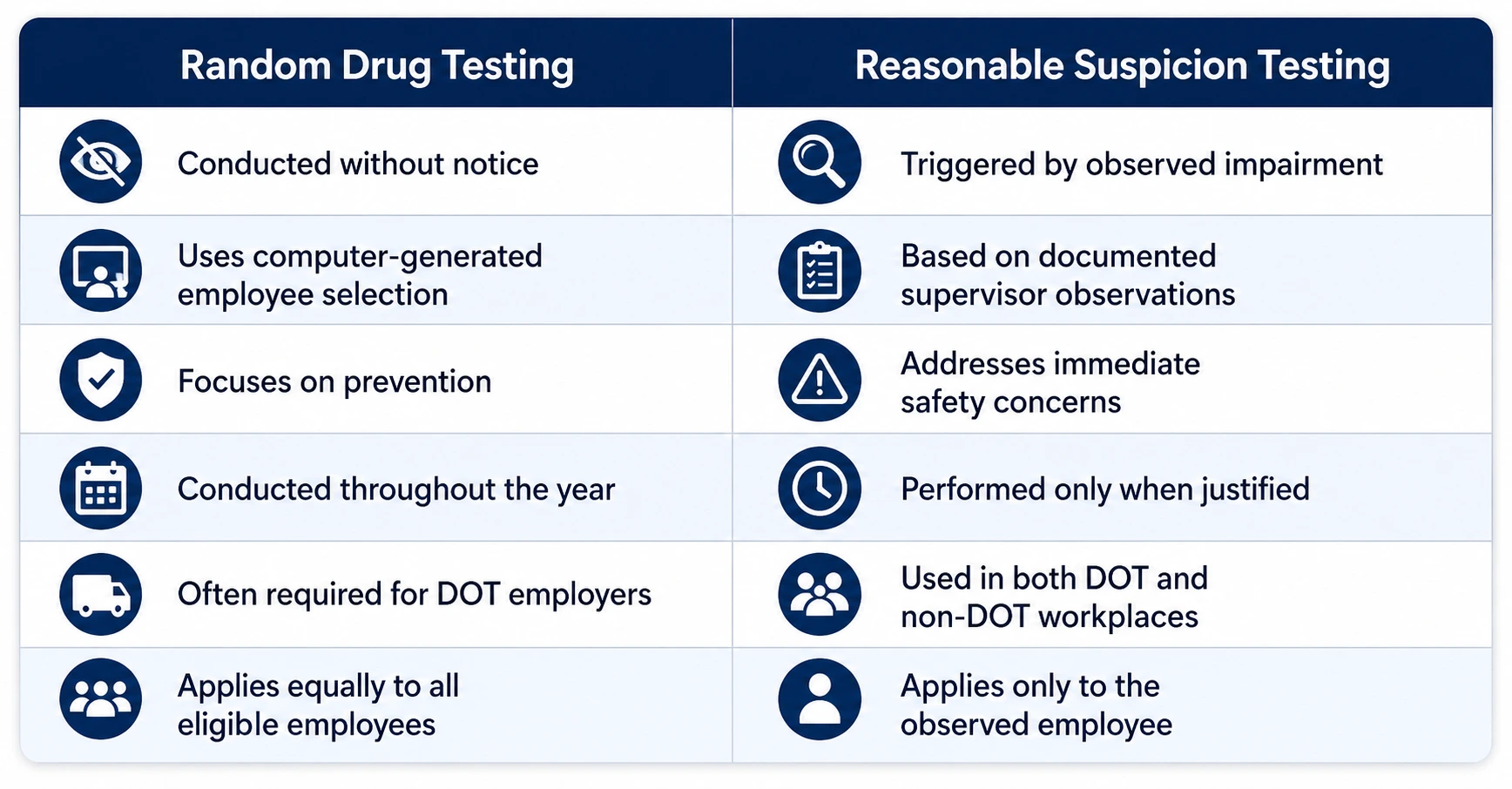
Understanding these differences helps employers implement fair, consistent testing policies while reducing legal exposure.
Build a Stronger Drug Testing Program
Whether your organization needs DOT or non-DOT testing, Gulf Coast Occupational Medicine provides comprehensive workplace drug testing solutions tailored to your industry.
Our services include workplace policy guidance, testing program administration, Medical Review Officer (MRO) coordination, and employer support to simplify compliance and improve workplace safety.
Businesses managing commercial drivers can also explore our Complete Guide to DOT Physical Exams for Employers to strengthen their overall compliance program.
DOT-Regulated vs. Non-DOT Drug Testing Requirements
Employers should understand that drug testing requirements vary depending on whether they fall under U.S. Department of Transportation (DOT) regulations or operate under non-DOT workplace policies.
DOT-Regulated Employers
Employers regulated by the DOT—including those governed by the Federal Motor Carrier Safety Administration (FMCSA)—must follow strict federal drug and alcohol testing requirements.
These regulations include:
- Random drug testing
- Pre-employment drug testing
- Post-accident testing
- Reasonable suspicion testing
- Return-to-duty testing
- Follow-up testing
- Supervisor training
- Recordkeeping requirements
DOT employers must also ensure their testing program complies with federal procedures regarding specimen collection, laboratory testing, and Medical Review Officer (MRO) review.
Companies employing commercial drivers can better understand these responsibilities by reviewing how DOT regulations impact commercial drivers.
Non-DOT Employers
Businesses that are not regulated by the DOT have greater flexibility when developing workplace drug testing policies.
However, they should still establish written procedures that clearly define:
- Who may be tested
- When testing occurs
- Testing methods
- Employee rights
- Documentation procedures
- Consequences of policy violations
Well-written policies help employers apply testing consistently while reducing legal and compliance risks.
Supervisor Training Is Essential
Even the strongest drug testing policy depends on supervisors who know how to recognize and respond appropriately to workplace impairment.
Training helps supervisors:
- Identify objective signs of impairment
- Document observations accurately
- Follow company procedures consistently
- Protect employee privacy
- Reduce legal exposure
- Respond quickly to potential safety risks
Without proper training, employers may unintentionally apply policies inconsistently, creating unnecessary compliance challenges.
Gulf Coast Occupational Medicine helps employers strengthen workplace safety through occupational health guidance and employer support programs tailored to safety-sensitive industries.
Common Employer Mistakes
A workplace drug testing program should be reviewed regularly to ensure it remains compliant with current regulations and industry best practices.
Common mistakes include:
- Poor documentation
- Inconsistent policy enforcement
- Selecting employees unfairly
- Failing to train supervisors
- Using outdated testing procedures
- Not reviewing policies annually
- Delaying testing after suspected impairment
Avoiding these mistakes helps protect both employers and employees while supporting a stronger workplace safety culture.
Best Practices for Building a Drug-Free Workplace
Successful workplace drug testing programs typically include:
- A written employee drug testing policy
- Consistent testing procedures
- Regular supervisor training
- Accurate recordkeeping
- Periodic policy reviews
- Partnerships with experienced occupational medicine providers
According to SAMHSA’s Workplace Resources, combining education, prevention, and consistent policy enforcement helps employers build safer and healthier workplaces.
Real-World Applications Across Industries
Drug testing programs often vary depending on workplace risks and regulatory requirements.
Transportation
Commercial transportation companies commonly perform DOT-required random drug testing to maintain compliance and protect public safety.
Construction
Construction supervisors may request reasonable suspicion testing when an employee displays signs of impairment before operating heavy equipment or working at elevated heights.
Manufacturing
Manufacturing facilities frequently combine:
- Pre-employment testing
- Random testing
- Post-accident testing
- Reasonable suspicion testing
to reduce workplace injuries and maintain operational efficiency.
Oil and Gas
Oil and gas employers often implement comprehensive drug testing programs because employees work around hazardous equipment, high-pressure systems, and safety-sensitive operations.
Why Employers Choose Gulf Coast Occupational Medicine
Employers across Baton Rouge and surrounding Louisiana communities trust Gulf Coast Occupational Medicine because we provide comprehensive occupational health solutions designed to simplify compliance while protecting employees.
Our services include:
- Comprehensive occupational health services
- DOT and non-DOT drug testing
- Medical Review Officer (MRO) coordination
- Supervisor guidance
- Employer compliance support
- DOT physicals
- Workplace health programs
- Convenient Louisiana clinic locations
Whether your business operates a small fleet or manages hundreds of employees, our experienced team helps create drug testing programs that improve workplace safety while reducing administrative burdens.
Build a Safer Workplace With a Compliant Drug Testing Program
Understanding the differences between random drug testing and reasonable suspicion testing helps employers make informed decisions that strengthen workplace safety, support regulatory compliance, and reduce organizational risk.
An effective drug-free workplace program goes beyond meeting legal requirements. It creates safer work environments, protects employees, improves productivity, and demonstrates a commitment to responsible business practices.
Whether you need DOT or non-DOT drug testing, supervisor training, or assistance developing a workplace drug testing policy, Gulf Coast Occupational Medicine is ready to help.
Contact Gulf Coast Occupational Medicine today to discuss your workplace drug testing needs, or visit one of our Louisiana clinic locations to learn how our occupational health experts can help your organization maintain a safer, more compliant workplace.
Frequently Asked Questions
What is the difference between random drug testing and reasonable suspicion testing?
Random drug testing uses a neutral, computer-generated selection process in which all eligible employees have an equal chance of being selected. Reasonable suspicion testing is initiated when a trained supervisor documents objective signs of possible workplace impairment.
Is random drug testing required for all employers?
No. Random drug testing is required for many DOT-regulated employers, while non-DOT employers may implement random testing based on their written workplace policies and applicable state and federal laws.
Why is supervisor training important?
Supervisor training helps employers recognize signs of impairment, document observations correctly, apply workplace policies consistently, and reduce legal and compliance risks.
How can Gulf Coast Occupational Medicine help employers?
Gulf Coast Occupational Medicine provides workplace drug testing, occupational health services, DOT compliance support, Medical Review Officer coordination, and employer guidance to help businesses maintain safe, productive, and compliant workplaces.
